
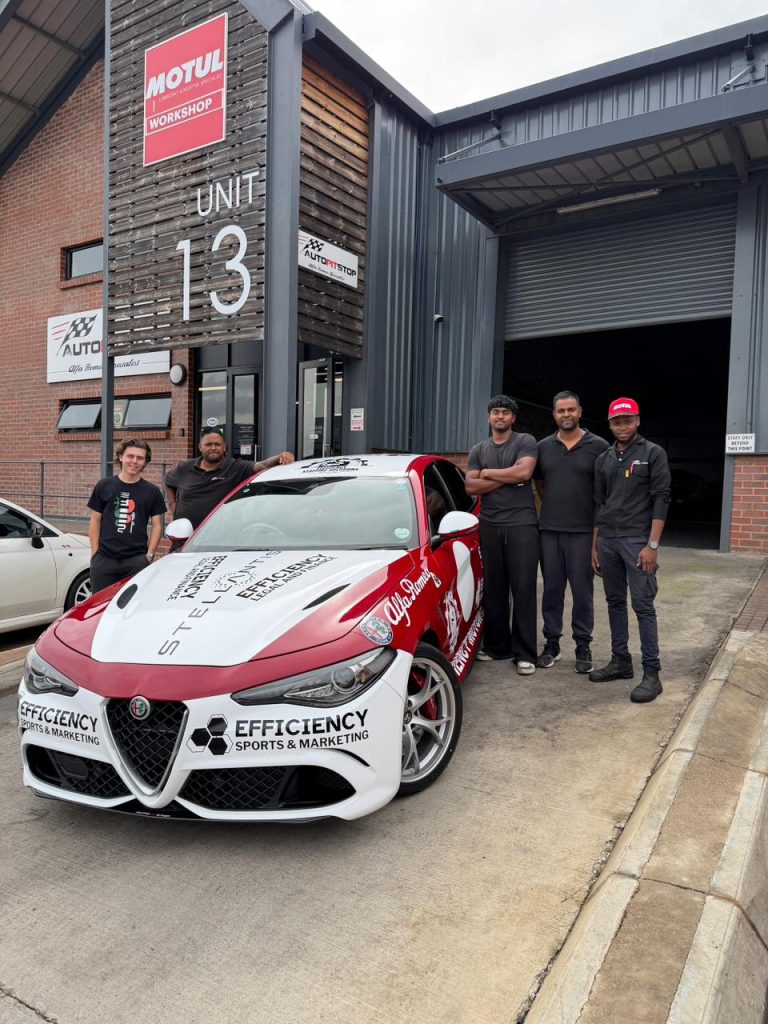
The 16th Simola Hillclimb runs from 30 April to 3 May in Knysna. For two days of King of the Hill competition on a 1.9 kilometre strip of public road winding into the Garden Route hills, it reduces motorsport to its most direct form. One car, one driver, one run. The clock doesn’t care about excuses.
For us at Autopitstop, this is a big moment. Two of our customer builds will take on the hill alongside factory-backed Alfa Romeo’s from Stellantis South Africa, and we’ll be in the pits for all five cars on the day. That kind of exposure doesn’t come around often, and we’re not taking it lightly.
Who We Are, Why Us?
We started Autopitstop in 2015 out of a passion for Alfa Romeo inherited from our late father. In 2018, we made a deliberate decision to focus the business entirely on the Alfa Romeo community, and in 2021, we expanded into larger premises to keep up with the demand. We are not a general performance shop that happens to work on Italian cars. We are Alfa people, first and last.
At an event like Simola, that depth of knowledge is the difference between a car that performs and one that merely competes. Understanding a car’s electronics, its torque delivery tendencies, its general quirks, and the way its systems communicate, none of that comes from a workshop manual. It comes from years of building and tuning Alfa Romeos that perform under different conditions. At Simola 2026, those years of work get their most public test yet.
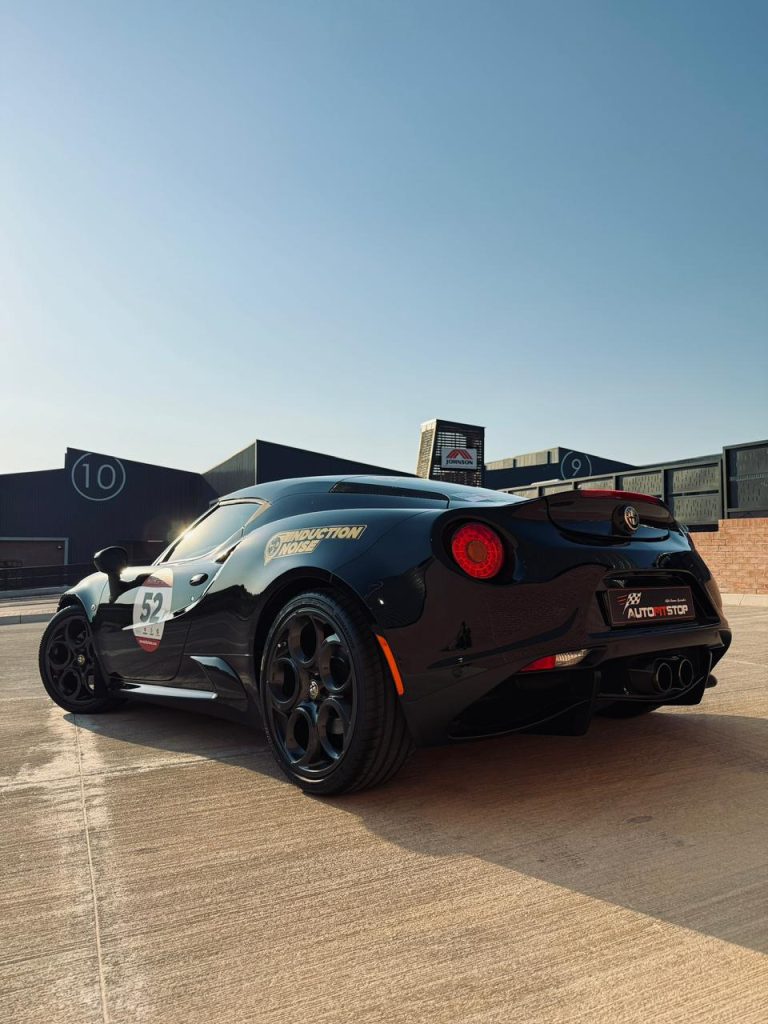
Andre Steenkamp’s 4C: Light Enough to Get Away With It
Andre is running his 2019 Alfa Romeo 4C in class B10, the road-legal modified street car category, up against Craig Czank’s Nissan GT-R, Tony Casey’s Giulia Quadrifoglio, and Jared Rossouw’s Volkswagen Golf. On paper, the 4C looks like the underdog. On a hillclimb, it makes its own argument.
The mid-engined layout keeps weight over the driven wheels. The carbon fibre tub keeps overall mass down. Add our ECU tune (and then some), sharpening throttle response and pulling more from the mid-range, and you have something that may be slower in a straight line than the GT-R but considerably more manageable through the Esses, where the hill’s character changes and composure becomes the currency.
The 4C rewards a driver who trusts it. Andre does. And it’s worth noting that he’s no stranger to Simola; he also competes in Classic Car Friday this year in a 1996 Toyota RAV4 GT4 Turbo fitted with the drivetrain from a Celica GT4, which tells you everything you need to know about the kind of competitor he is.
Tony Casey’s Giulia: Where the Numbers Start Arguing With Each Other
Then there’s Tony and his 2017 Giulia Quadrifoglio, the car we’re most excited about, and the one that represents one of our most demanding builds to date. It’s carrying 450kW and 800Nm. Serious figures for a road-legal class in a competition where the current Modified Saloon Car record stands at 37.090 seconds, set last year by Pieter Zeelie in a bespoke rear-wheel drive MR2.
The challenge with this much power is keeping the car’s electronic nanny happy when it’s being asked to smoothly deliver 800Nm. The Giulia’s factory electronic rear differential was designed to manage torque within a standard power envelope. Tony’s car is well outside that envelope now. On a hillclimb surface with real-world imperfections — camber changes, slight surface variations through the Esses — the system can read instability where the driver feels grip and pull torque at exactly the wrong moment. The hesitation costs hundredths. On a run measured in the low forties, hundredths are the margin.
Getting his Giulia up the hill cleanly, without the electronics working against him, is the problem we’ve been solving in the workshop for months. Simola is where we find out if we got it right.
What We Do in the Pits
At Simola, there are over 550 competitor support crew and mechanics in the pit lane across the whole event, and around 1,400 timed runs made over the weekend. The window between each driver’s attempts is short. There’s no room for indecision.
For all five Alfas, our pit work covers the same core disciplines.
- Tyre pressures are checked and corrected after every run; a hillclimb generates heat quickly, pressures climb, and even a small deviation from the target window changes how the car behaves on corner entry and exit.
- Engine and drivetrain temperatures are monitored to confirm everything has returned to the correct operating range before the car goes again.
- Brake temperatures are tracked because the stop from speed at the top of the hill, and the repeated hard braking through the Esses, loads the brakes in a way normal road driving never does.
- Diagnostic data is pulled from each car’s ECU after every run to check for faults, intervention events, or anything the electronics flagged that the driver may not have felt.
- On the 4C and Giulia, live tuning between runs is also part of our work, like adjusting maps and delivery to correct what the data and the driver are telling us.
Beyond the data, there’s the conversation with the driver. What they felt, where the car moved underneath them, whether it gave them confidence or held them back. That feedback shapes the next set of adjustments. Sometimes it’s a pressure change. Sometimes it’s a suspension tweak. Sometimes the data and the driver agree, and the answer is to leave the car exactly as it is. Lastly, safety is our top priority for the Alfa’s and the drivers, so we’ll be ensuring that aspect of the race is also vetted.
Knowing when not to change anything is as important as knowing what to change. We have enough hours on these platforms to make that call.
The Factory Cars
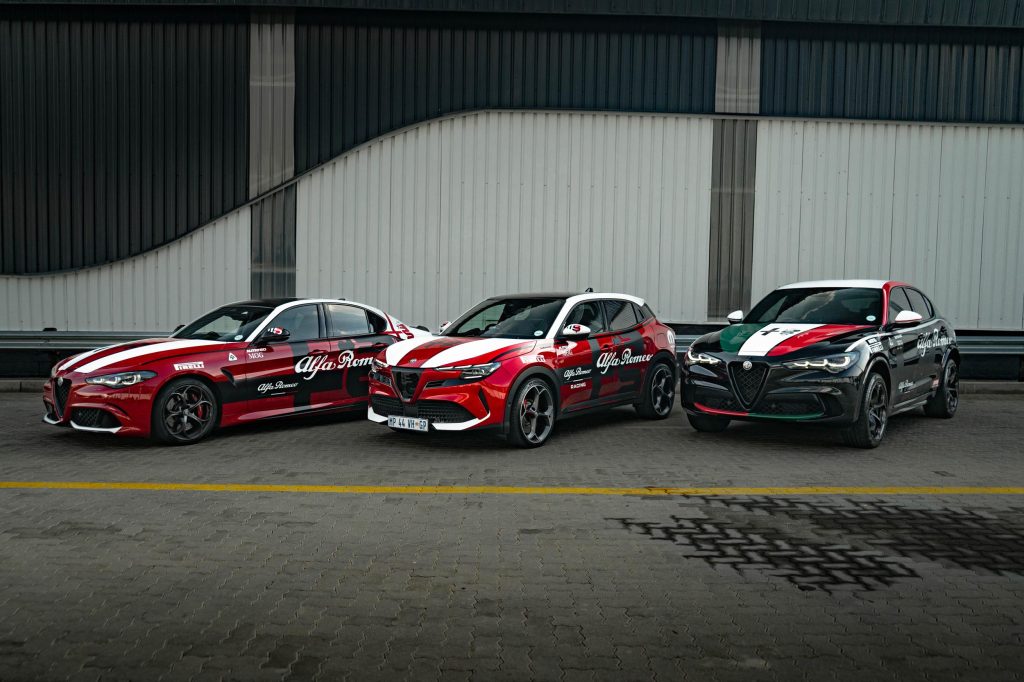
Stellantis South Africa enters three models alongside our two customer builds, and it makes for an interesting line-up across the Alfa Romeo pit area.
Art Denisov, a privateer who caught the attention of Alfa Romeo South Africa with his performance in his own Giulia at the 2025 Speed Classic Cape Town, drives the factory Giulia Quadrifoglio in class A3. Janus Janse van Rensburg, Alfa Romeo’s Head of Marketing and Sales, returns for his fourth Simola in the Stelvio Quadrifoglio, defending his class B9 win and record from 2025. Trevor Tuck, a Simola regular with deep roots in the Alfa community, takes the wheel of the all-electric Junior Elettrica Veloce in class A8, a car that was a finalist for the 2026 South African Car of the Year.
Three factory cars, three different stories. All on the same hill, on the same day, running the same 1.9 kilometres.
Where to Watch
The King of the Hill runs on Saturday, 2 May and Sunday, 3 May, with track action from 09h00 each day. If you’re at Simola, pit access is available, and there’s no better place to watch the preparation between runs than from the pit lane itself.
Watch Art find out whether months of privateer experience in his own Giulia translates when the factory hands you their keys. Watch Janus defend his class record in a car most people wouldn’t take to a hillclimb, let alone win one in. Watch Trevor show what instant torque looks like when there’s no gearbox getting in the way.
And watch Andre carry the 4C through the Esses with a lightness the heavier machinery can’t match. Watch Tony manage the gap between what his Giulia wants to do and what the electronics will allow.
Our team and the drivers backed by Alfa Romeo South Africa have everything to play for.
One run. Get it right.